Copacabana Live Cam — Watch Rio de Janeiro's Iconic Beach Right Now
What you are seeing
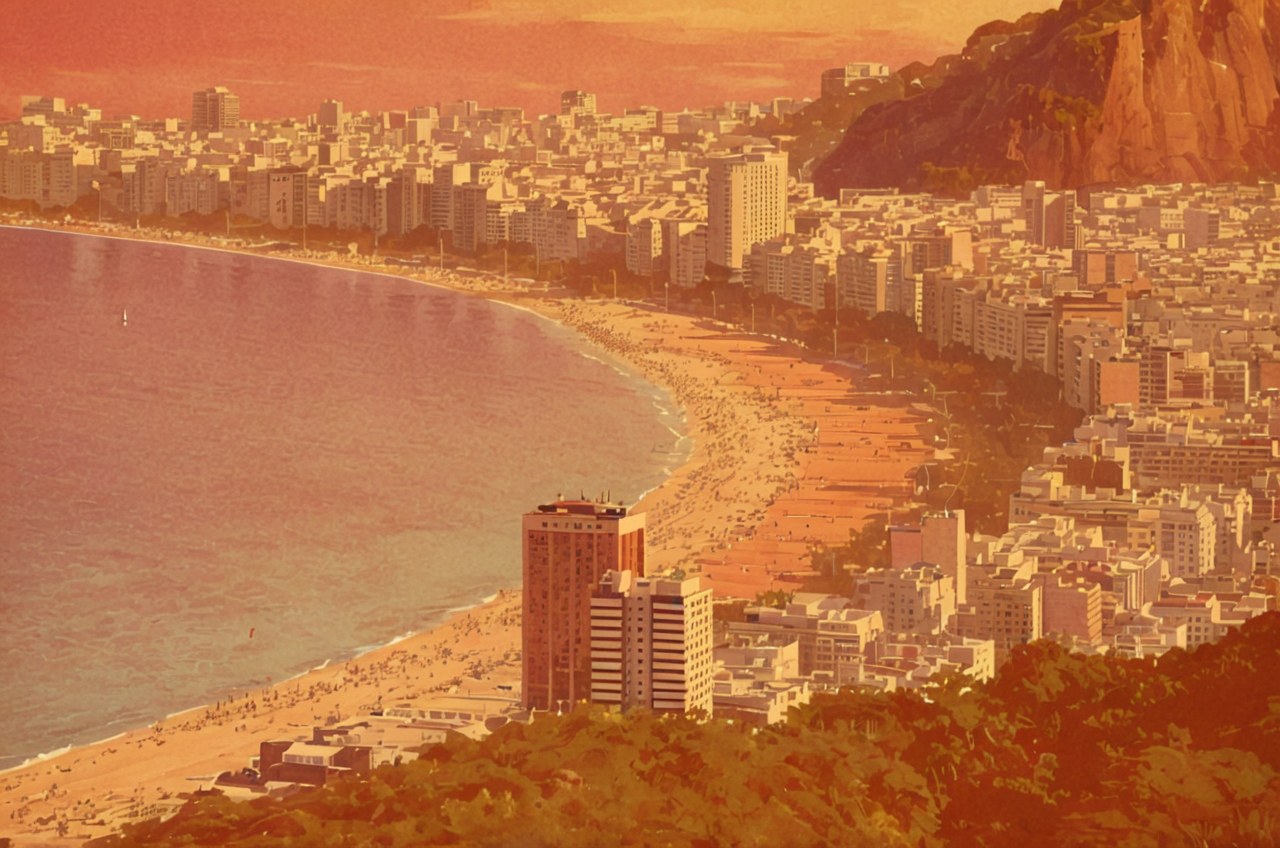
Copacabana Beach is a beach in the Copacabana neighborhood of Rio de Janeiro, Brazil. It curves in a crescent for 4.5 km along the South Atlantic Ocean. The cameras on this page sit at Posto 3 and Posto 6, two numbered lifeguard posts along the shoreline.
- A 4.5 km crescent — the sand sweeps along the Atlantic in one long curve.
- In Rio de Janeiro — the Copacabana neighborhood, beside the city's high-rise blocks.
- Open to the South Atlantic — the ocean fills the whole view from the sand.
Watch Copacabana live
The three cameras on this page are run by the Homes in Rio channel. They frame the beach at Posto 3, in the middle of the shoreline, and at Posto 6, near the Copacabana Fort end.
Best time to watch
The feeds run around the clock, so the view changes with the hour and the weather. Clear mornings show the full sweep of sand with few people on it. Late afternoons turn the sea to gold at golden hour. The beach faces the Atlantic, so the light over the water shifts quickly. Check back a few times; a cloudy hour can clear in minutes.
How to visit
Copacabana is a neighborhood of Rio de Janeiro, Brazil, set on the Atlantic coast. The beach runs 4.5 km along the shore, easy to reach on foot or by metro. Mundo Vivo keeps these feeds organized so you can check the real view before you go.
Copacabana by the numbers
- Beach length: 4.5 km
- Coordinates: 22.97°S, 43.18°W
- On: South Atlantic Ocean
- In: Rio de Janeiro, Brazil — a city founded in 1565
Frequently asked questions
Is Copacabana Beach a real beach I can watch live right now?
Yes. Three webcams stream Copacabana's sand and surf all day, embedded from YouTube with no sign-up. The cameras sit at Posto 3 and Posto 6, two lifeguard posts along the shoreline. What you see depends on the hour and the weather.
How long is Copacabana Beach?
The beach runs 4.5 kilometers, the length recorded on Wikidata for the item Q63894. It sweeps in a crescent, which is why the cameras at Posto 3 and Posto 6 frame different angles of the same shoreline. The precise coordinates are 22.970958°S, 43.181649°W.
What does the name Praia de Copacabana mean?
Praia de Copacabana is the beach's native Portuguese name, recorded on Wikidata. It means beach of Copacabana, after the Copacabana neighborhood of Rio de Janeiro. The name is written in Portuguese because that is the language of Brazil, and it is the name used on signs and maps around the city.
Where exactly is Copacabana Beach?
It sits at 22.97°S, 43.18°W, in the Copacabana neighborhood of Rio de Janeiro, Brazil, open to the South Atlantic Ocean. The beach is recorded under GeoNames ID 3465589 on the Wikidata item Q63894. Its native name is Praia de Copacabana, and the city of Rio de Janeiro was founded in 1565.
What will I see on the cameras?
The cameras frame the beach at Posto 3, in the middle of the shoreline, and at Posto 6, near the Copacabana Fort end. You see the wide sand, the surf, the black-and-white mosaic sidewalk that edges the sand, and the beachgoers. The view shifts with the hour and the weather.
When is the best time to watch?
Clear mornings show the whole sweep of sand with few people, and late afternoons turn the sea gold at golden hour. The beach faces the Atlantic, so the light changes fast. Check back a few times; a cloudy hour can clear in minutes.