Safari Waterhole Live Cam — Watch African Wildlife at the Waterhole Right Now
What you are seeing
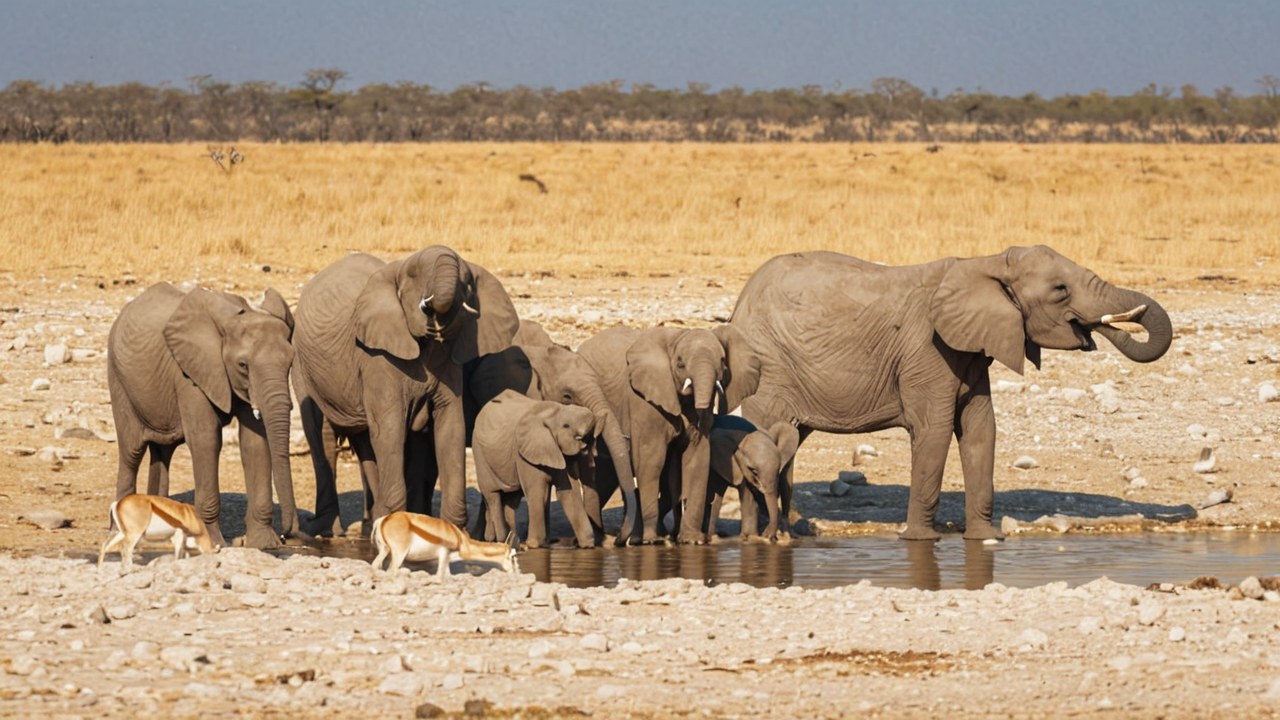
A waterhole cam is a fixed camera aimed at a watering point in an African game reserve. The animals are not staged and not fed; they come to drink on their own schedule. The two Etosha feeds on this page frame the Okaukuejo waterhole, the most famous waterhole cam in the world. The other feeds cover the Masai Mara in Kenya, the Victoria Falls area in Zimbabwe, and Amboseli in Kenya, where Mount Kilimanjaro sits behind the water.
- Etosha National Park, Namibia — a national park that dates from 1907 and covers 22,270 square kilometres.
- The Okaukuejo waterhole — a floodlit watering point where game gathers day and night.
- Masai Mara, Kenya — a protected area that dates from 1961 and spans 580 square miles.
Watch the waterholes live
This page carries six live waterhole and safari feeds, all embedded from YouTube with no sign-up and no cost. Two cameras frame the Okaukuejo waterhole in Etosha National Park, Namibia. The others cover the Masai Mara in Kenya, a broad Wild Africa safari cam, the Victoria Falls waterhole in Zimbabwe, and the Amboseli waterhole with Mount Kilimanjaro behind it. Each feed runs around the clock, so the view changes with the hour and the season.
Best time to watch
The streams run around the clock, so what you see depends on the hour, the season, and which animals are thirsty. In the dry months, from roughly June to October, animals concentrate at the waterholes because water is scarce elsewhere. Dawn and dusk tend to be the busiest hours. The Okaukuejo waterhole is floodlit at night, which makes it one of the rare places to watch game after dark.
How to visit
Etosha National Park sits in northern Namibia and covers 22,270 square kilometres across the Omusati, Oshana and Oshikoto regions. The Masai Mara reserve lies in Narok County, in the south-west of Kenya. Mundo Vivo keeps these feeds organized so you can check the real view of the waterholes before you go.
Safari waterholes by the numbers
- Etosha area: 22,270 square kilometres
- Etosha coordinates: 18.79°S, 16.26°E
- Etosha founded: 1907
- Masai Mara area: 580 square miles
- Masai Mara coordinates: 1.49°S, 35.14°E
- Masai Mara founded: 1961
Frequently asked questions
Can I watch African wildlife live right now?
Yes. This page carries six live waterhole and safari feeds, embedded from YouTube with no sign-up and no cost. The cameras frame real watering points in Etosha National Park, the Masai Mara, Victoria Falls and Amboseli. What you see depends on the hour, the season, and which animals are thirsty.
What is the Okaukuejo waterhole?
It is the best-known waterhole cam in the world, at the Okaukuejo rest camp in Etosha National Park, Namibia. What sets it apart is the floodlighting: the pool stays lit after dark, so you can watch elephants, rhinos and other game drinking at night. That night viewing is what made the feed famous.
Which animals come to the waterhole?
Elephants are the most regular visitors, often arriving in family herds of mothers and calves. Giraffes, zebras, springbok and black rhino also come to drink. Etosha is known for its black rhino population, which is one reason wildlife lovers keep returning to this waterhole. The exact mix changes by the hour and the season.
When is the best time to watch a waterhole?
The dry season, roughly from June to October, is when animals gather at the water because it is scarce elsewhere. Dawn and dusk are the busiest hours of the day. The Okaukuejo waterhole adds one more window: its floodlighting keeps the pool visible after dark.
Where exactly is Etosha National Park?
Etosha National Park sits in northern Namibia, centred at 18.79°S, 16.26°E. It covers 22,270 square kilometres across the Omusati, Oshana and Oshikoto regions. The park is named after the Etosha pan, a vast salt pan that stretches across much of its centre.
What is the Masai Mara?
The Masai Mara is a protected area in Narok County, in the south-west of Kenya. It spans 580 square miles and dates from 1961. It is famous for the Great Migration, when huge herds of wildebeest and zebra move through the reserve. Its coordinates are 1.49°S, 35.14°E.